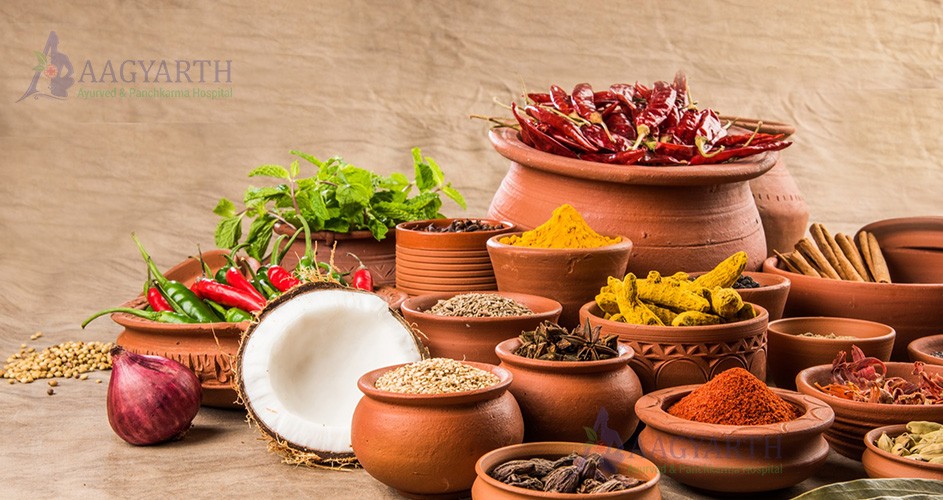
Ahara is One of the Supporting Pillars for Life Sustenance and Has Been First Upastambha in Three Upastambha. I.e.1.ahara 2.nidra 3.brahmacharya
For Intake of Ahar Ayurveda Has Enlisted Some Special Conditions Which Need to Be Followed to Obtain Complete Benefits of the Food.they Are Called as Ahara Vidhi Visheshayatan.
The Asta Ahara Vidhi Visheshayatan Are as Followes
(1) Prakruti (Nature of Food)
Food Qualities and Nature Are Called as Its Prakruti and Svabhav Respectively.the Properties of Dravyas Like Laghu, Guru Etc. That Are Naturally Present in Substances Used as Food and Drugs Are Known as Prakruti.ex: Mudga is Laghu and Masha is Guru.
(2) Karan (Processing)
Methods Used to Prepare Food is Called Karan. Ex: Boiling, Roasting, Soaking, Churning.
Karan Means Processing the Food Substances Which Leads to Transformation of Their Inherent Qualities &
Characters So as to Make Them Good for Consumption & Easily Digestible.
Sanskar is Said to Bring About Gunantaradhan (Change in Character & Qualities of the Food Substances)
(3) Samyoga (Combination of Food Substances)
When More Then Two Substances Are Mixed Together the Qualities of the Combination Will Be Totally
Different From the Individual Components.sometimes Its Extremely Benefits or Sometimes Its May Be Dangerous.
Ex: Honey & Ghee When Mixed in Equal Propertions or Fish is Taken Along With Milk Will Be Dangerous for Health.
(4) Rashi (Quantity)
Quantity of Food Substances is Called Rashi. Which Determines the Result of Their Administration in Adequate and Inadequate Amount.
The Quantity of Food Taken in Its Entirely is Sarvagraha.the Quantity of Each of the Ingredients of the Food is Called Parigraha.
(5) Desha (Habitate)
Desha Covers the Place Where Food is Grwon, Palce to Which They Are Exported, the Palce Where They Are Utilized Ex: The Food or Herbs Grown in Himalayas Are Heavy and More Potent and Grown in Desert Regions Are Light in a Nature Etc
(6) Kala (Time)
Kala is Stands for Both the Time in the Form of Day and Night and States of Individuals Body. One Should Also Decide the Type and the Proportion of the Diet According to the Different Stages of Childhood, Youth & Old Age.
The Time is Classified Into Two Types I.e.1.nityak 2.avasthik
Nityak Refers to the General Seasonal and Daily Conditions and Avasthik Refers to the Disease Conditions.ex: Guru Ahar Indicated in Hemanta Ritu Due to Incresed Digestive Fire.consuming Laghu Ahara in Jwara So as to Support Weak Dugestive Fire.
(7) Upayogsamstha (Dietetic Rules)
It Means Rules and Regulations for Intake of Food and They Should Be Followed Strictly.
These Dietetic Rules Are Totally Dependent on the Jeerna Ahara Lakshanas (Symptoms of Proper Digestion) I.e. Cleanliness of Belching, Enthusiasm, Lightness of Body Etc.
One Should Eat Proper Quantity of Food While Following the Dietetic Rules I.e. Eat Hot and Fresh Food, Eat Unctous, Proper Quantity, Don’t Eat in a Hurry or Slow Etc.
(8) Upayokta (the Persons Who Consumed Food)
It Means the Person Who Consumed Food.he is the One Responsible for the Habitual Intake of Things I.e. Okasatmya.
The Person Who Takes the Food Should Be Accustomed to Intake of Food as a Regular Habit, at Right
Times, in Proper Quantity and Quality.
Importance of Ahara Vidhi Visheshayatan
State of Dosha, Dhatu and Agni All Are Maintained by Taking Diet According to Above Mentioned Rules.
The Aim of Ayurveda is Maintain Health of Healthy Persons and Cure of Disease Which Can Be Fulfilled by
These Dietetic Rules.therefore, a Lot of Ailments That Only Developed Because of Poor Eating Habits Can Be Avoided.
Through Properly Adopting Dietary Habits Can Help Reduce the Risk for a Various Life Style Disorder.